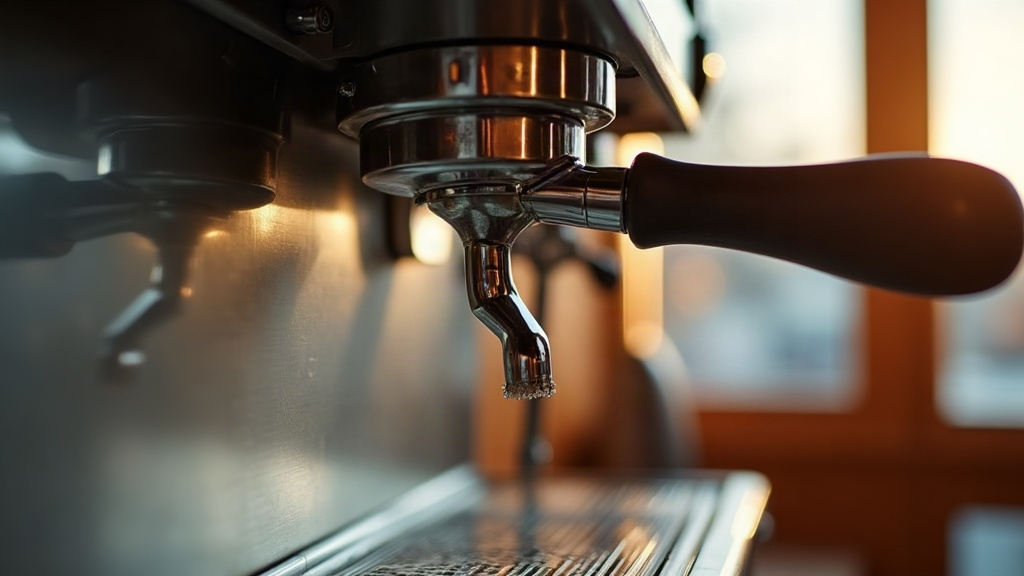
The hidden reason your espresso machine keeps scaling and your shots taste flat is not the machine, the coffee, or the barista. It is Boise's water. This is not a knock on our city; it is just geology. The Treasure Valley sits above an aquifer that pushes mineral-rich water to the surface, and those minerals, while harmless to drink, are brutal on commercial coffee equipment. If you run a coffee shop, cafe, or espresso bar anywhere in the Boise area, including Meridian, Eagle, or Nampa, this article is for you.
Why Boise Water Is Especially Tough on Coffee Equipment
Water hardness is measured in grains per gallon (GPG). Anything above 7 GPG is considered hard. Boise city water typically tests between 10 and 15 GPG, and parts of Meridian regularly hit 12 to 17 GPG. To put that in context, the average American city sits around 10 GPG. We are at the high end of that range, and in many neighborhoods we are well above it.
The culprit is calcium and magnesium. These minerals dissolve naturally into groundwater as it moves through the volcanic basalt and limestone formations that define southern Idaho's geology. When that water is heated, as it is hundreds of times a day inside a commercial espresso machine, calcium carbonate precipitates out of solution and bonds to every metal surface it touches. That residue is scale, and it compounds quietly until suddenly your flow rates are off, your temperatures are inconsistent, and your equipment tech is giving you a quote that makes your eyes water.
Total dissolved solids (TDS) is the other number that matters here. TDS captures all minerals in solution, not just hardness. Boise tap water often runs between 250 and 350 mg/L in TDS. For espresso specifically, that range creates two problems at once: it accelerates scaling, and it pushes the water chemistry outside the window where espresso extracts properly.
What Hard Water Does Inside an Espresso Machine
Most coffee shop owners see the symptoms without knowing the cause. Here is what is actually happening inside your equipment when untreated Boise water runs through it day after day.
Boiler and group head fouling. Scale accumulates on the interior walls of your boiler. A thin layer, even one-eighth of an inch, acts as an insulator and forces your heating element to work harder to reach target temperature. This raises your energy bill and shortens element life. Thicker buildup can crack a boiler if water gets trapped in scale pockets and superheats.
Solenoid valve and flow restrictor clogging. Scale particles dislodge over time and travel downstream. Solenoid valves, which control water flow at the group heads, are small-tolerance components. A fragment of scale the size of a grain of sand is enough to cause erratic behavior or a stuck valve.
Temperature instability. When scale insulates the boiler walls unevenly, your machine's temperature sensor reads one thing while the actual brewing temperature is something else. The result is inconsistent extraction, and your baristas will be chasing a moving target every time they dial in.
Shortened equipment life. A commercial espresso machine is a significant capital investment, often $8,000 to $20,000 for a quality two-group machine. Untreated water in a high-hardness area like Boise can cut a machine's useful life by a third or more. We have seen shops in Nampa and Caldwell that were descaling every four to six weeks, burning through service contracts, and still replacing machines years ahead of schedule, all because of water they never tested.
The Right TDS for Espresso: What Boise's Water Gets Wrong
The Specialty Coffee Association (SCA) publishes water quality standards for brewing, and espresso is the most sensitive application in any coffee program. Their guidelines call for:
- TDS: 75 to 250 mg/L, with a target around 150 mg/L
- Hardness: 50 to 175 mg/L as calcium carbonate (roughly 3 to 10 GPG)
- pH: 6.5 to 7.5
- No chlorine or chloramine taste or odor
Untreated Boise water misses the TDS target by 70 to 130 mg/L on the high end, and hardness often runs two to three times the upper SCA limit. That is not close to the window; it is well outside it.
Here is the part that surprises most cafe owners: mineral content does not just damage equipment, it changes the flavor of the espresso itself. Calcium and magnesium interact with the acids and oils in coffee during extraction. When the mineral concentration is too high, it suppresses certain flavor compounds and amplifies bitterness. Your espresso can taste flat or harsh for reasons that have nothing to do with your grind, your dose, or your technique. The water is the variable nobody is checking.
We work with shops across the Treasure Valley and we often hear some version of "we use the same beans and the same recipe as our other location, but the espresso tastes different here." The location difference is almost always water chemistry.
Idaho's Groundwater Is Being Watched More Closely Now
Here is something worth knowing if you have been running on the same water filter or softener setup for a few years without re-testing your water: the groundwater chemistry in the Treasure Valley is not static.
Earlier this week, KIVI TV reported that the Idaho Department of Water Resources (IDWR) has launched a program to measure 600 wells across the Treasure Valley and Payette Valley to track groundwater levels amid the region's rapid growth. "We're trying to just get unbiased water level measurements at different wells throughout the Treasure Valley and Payette Valley," said Ryan McCutcheon, project manager in IDWR's hydrology section.
This matters for your coffee program in a direct way. As the Treasure Valley population grows, water is pulled from the aquifer at higher rates. When aquifer levels shift, so does the ratio of minerals in the water column, because deeper water often carries different mineral concentrations than shallower water. A filter or softener calibrated two years ago may no longer be doing what you think it is doing. The state is monitoring this because the stakes are real, and your water test should be keeping pace with those changes.
The USGS notes that groundwater mineral content is influenced by the geology water travels through and by the depth at which it is drawn. Both factors are subject to change in a fast-growing basin like the Treasure Valley. An annual water test is not paranoia; it is maintenance.
How Boise Coffee Shops Are Solving the Scaling Problem
The coffee shops in Boise, Meridian, and Eagle that have addressed this have settled on a two-stage approach. It is not complicated, but it does need to be sized and configured for your specific water and your specific volume.
Stage 1: Commercial water softener. A properly sized commercial water softener uses an ion exchange process to replace calcium and magnesium with sodium ions. This eliminates the scaling mechanism. The key word is "sized." A residential softener running at coffee-shop volumes will exhaust its resin bed too quickly and leave you with unsoftened water during peak hours. Commercial-grade units are built for the flow rates and daily volumes that a busy espresso bar demands.
Stage 2: Post-softener filtration to hit the TDS target. A salt-based softener solves hardness but can elevate sodium levels in ways that push TDS in an undesirable direction for espresso. The second stage, typically a reverse osmosis (RO) unit with a remineralization cartridge, strips the water down and then adds back a controlled mineral profile. This lets you dial TDS to the SCA target range of 100 to 175 mg/L and hold it there consistently. Some shops use a simpler blending valve approach: mixing softened water with a small percentage of filtered water to hit the target ratio without a full RO system.
Regular testing and servicing. The system does not run itself. Filter cartridges exhaust, resin beds saturate, and membranes foul. We recommend quarterly spot checks and an annual full water test for any commercial coffee operation in the Treasure Valley. If your service tech is only showing up when something breaks, you are running reactive maintenance on a proactive problem.
What to Do If You Run a Coffee Shop, Cafe, or Espresso Bar in Boise
If you have never had your water tested, that is the first step. A baseline test tells you your current hardness, TDS, pH, and chloramine levels, which is the minimum you need to size a treatment solution correctly. Guessing and buying equipment off a shelf is how shops end up with undersized softeners or RO systems that cannot keep up during a Saturday morning rush.
If you already have a filter or softener, when did you last test the output water? Not the tap water coming in, the water coming out of your treatment system and going into your machine. A filter that was working a year ago may have exhausted. We see this frequently in the Meridian and Eagle markets, where newer commercial spaces were set up quickly with residential-grade equipment that was never meant for commercial volumes.
If you are opening a new location, treat water chemistry as a line item in your buildout plan, not an afterthought. The cost of a proper commercial treatment system is a fraction of one premature equipment replacement, and it pays back in energy savings, reduced descaling labor, and a measurably better product in the cup.
For a broader look at treatment options and how to compare systems by capacity and cost, our 2026 water softener buying guide covers the key decision points in plain language.
Get a Free Water Test for Your Business
We test for hardness, TDS, chloramine levels, and everything that matters for coffee equipment. No pressure. Just answers.
Frequently Asked Questions
How hard is the water in Boise, Idaho?
Boise city water typically measures 10 to 15 grains per gallon (GPG), while Meridian and other parts of the Treasure Valley often run 12 to 17 GPG. Anything above 7 GPG is considered hard; Boise consistently sits well above that threshold, which is why scaling is such a common problem for coffee equipment here.
What TDS level is ideal for espresso?
The Specialty Coffee Association recommends a total dissolved solids (TDS) range of 75 to 250 mg/L for brewing water, with a target of about 150 mg/L. Untreated Boise or Meridian tap water frequently exceeds 300 mg/L, which is outside the range for quality espresso and accelerates mineral buildup in machines.
Will a standard water softener work for a coffee shop?
A standard salt-based softener reduces hardness but swaps calcium and magnesium ions for sodium, which can push TDS in an undesirable direction for espresso. Most coffee shops use a two-stage approach: a commercial softener to handle the bulk of the hardness, followed by a reverse osmosis or remineralization filter to dial in the final TDS and mineral profile. We help size and configure both systems for commercial volumes.
How often do I need to descale my espresso machine if I use softened water?
With properly softened and filtered water, most commercial espresso machines in Boise go six to twelve months between descaling cycles rather than the every-four-to-six-weeks schedule that untreated hard water demands. The exact interval depends on your water volume and residual hardness after treatment.
Does Idaho's groundwater chemistry change over time?
Yes, and recent news confirms this is being watched closely. The Idaho Department of Water Resources is actively measuring 600 wells across the Treasure Valley to track groundwater levels as the region grows rapidly. As aquifer conditions shift, so can mineral concentrations. Coffee shops that calibrated their filtration years ago may be running on different water chemistry today, which is one reason we recommend annual water tests.
Ready to Stop Fighting Your Espresso Machine?
We serve coffee shops, cafes, and commercial kitchens across Boise, Meridian, Eagle, Nampa, and the rest of the Treasure Valley. A free water test takes about 20 minutes and tells you exactly what you are working with.