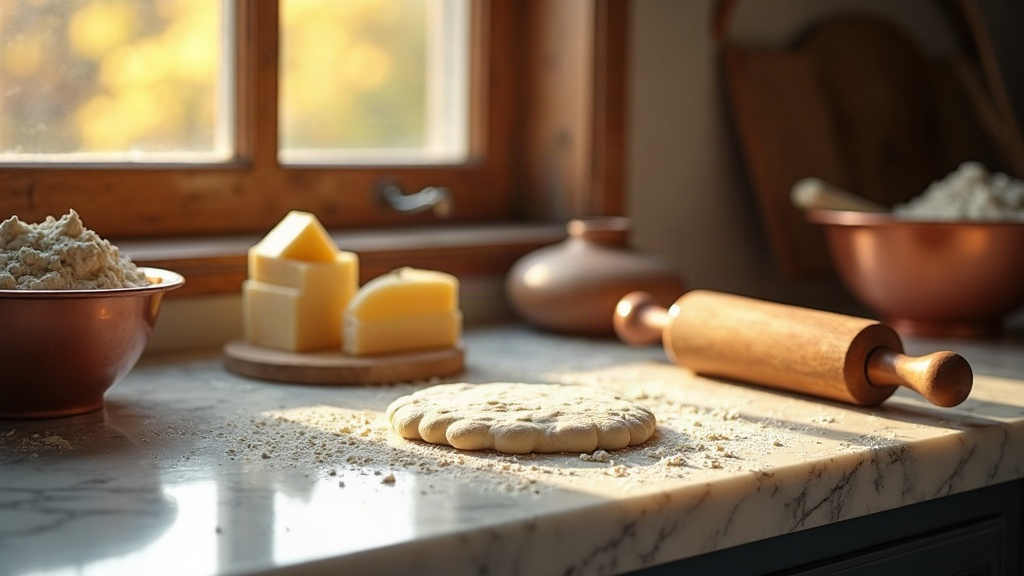
What if your pie crust problem has nothing to do with your butter temperature? Every October, millions of home bakers pull out their grandmothers' recipes, stock up on flour and sugar, and then spend the next two months troubleshooting results that should be simple. The pie crust is too tough. The dinner rolls barely puffed. The shortbread tastes a little flat. Searches for "holiday cookie recipes" spike more than 300% starting the first week of October, which means a lot of people are about to make the same ingredient substitutions, watch the same YouTube tutorials, and still end up with the same frustrating results.
Here is the thing professional bakers figured out decades ago: flaky pie crust is not mostly about butter temperature, and bread rise is not mostly about yeast quality. Both are sensitive to something almost no home baker considers, the mineral content of the water in the recipe. Pie crust fails are the single most-common baking complaint every holiday season. Most people blame themselves: overworked the dough, butter got too warm, measured wrong. Sometimes those things are true. But experienced pastry chefs know there is another variable sitting right at the sink that nobody thinks to adjust.
French baguettes are a useful reference point. Part of what makes Paris boulangerie bread taste the way it does traces back to the city's naturally soft water supply. Bakers who try to recreate the recipe in hard-water cities consistently get a denser, chewier result, same recipe, same technique, different water. This is not folklore. It is mineral chemistry, and it is the same chemistry at work in your kitchen every time you bake this holiday season.
The Ingredients Everyone Checks (And the One Nobody Does)
Before the holidays, most bakers do a version of the same prep: verify the yeast is still active, make sure the butter is cold, double-check that the baking powder has not expired. These are legitimate variables. All of them matter. What does not show up on that checklist is the water, because water seems neutral by definition. It is just water. It does not have an expiration date. You cannot see anything wrong with it.
But water is not neutral in the kitchen. It carries dissolved minerals, chemicals, and compounds that interact with your ingredients in measurable ways. Gluten formation, yeast activity, dough pH, even the color your crust browns. All of these are influenced by what is dissolved in your water. The minerals are invisible, but their effects show up in the finished product.
Boise's water quality report shows a hardness level that puts Treasure Valley consistently among the harder supplies in the Pacific Northwest. Boise tap water runs 10-15 grains per gallon. Meridian, where a large share of newer homes are concentrated, runs 12-17 gpg. Those numbers come from the Snake River Plain aquifer, which the water supply draws from. The aquifer carries naturally high calcium and magnesium picked up from the surrounding volcanic geology, and that mineral load follows the water all the way to your mixing bowl.
What Boise Tap Water Actually Does to Your Dough
High calcium content does something specific to gluten: it tightens the protein bonds. A small amount of mineral reinforcement is actually useful in some applications. But Treasure Valley water sits well above the threshold where the effect becomes a liability. Gluten that is over-tightened produces dough that resists rolling, springs back, and bakes into a dense, tough texture. In a pie crust, that means no flakiness. In a croissant or laminated dough, it means no lift. In a cookie, it means a firmer bite than you were going for.
The yeast issue is separate and worth understanding on its own. Boise uses chloramine in water treatment, not plain chlorine. Chloramine is more chemically stable than chlorine, which is why it is used. It stays active longer in the distribution system. The tradeoff is that it is harder to off-gas from water before baking, and it directly inhibits yeast activity. Bread bakers who work with chloramine-treated water see rise reductions of 15-20% compared to filtered water under the same conditions. That is the difference between rolls that look like rolls and rolls that look like dense, sad pucks.
There is also a pH effect. Hard water raises dough pH slightly, which affects how and when the Maillard browning reaction kicks in. The result is uneven or delayed browning. Crust color that does not match what the recipe photo showed you. And in delicate applications like shortbread or butter cookies, people with sensitive palates can detect the mineral taste carried by high-calcium water. It is subtle, but it is there, and it is why those cookies taste slightly off even when you followed the recipe exactly.
For a deeper look at how hard water affects other cooking applications beyond baking, the chemistry overlaps more than most home cooks realize.
The Three Baking Problems Hard Water Causes
To make this concrete, here are the three most common baking failures that trace directly to hard water, and what is actually happening in each:
Tough pie crust and pastry. Calcium and magnesium strengthen gluten bonds beyond what the recipe was designed for. The dough becomes difficult to work, tears when rolled, and bakes dense instead of flaky. Switching to filtered or softened water relaxes gluten formation back to normal levels. King Arthur Baking has documented water chemistry as a legitimate variable in pie dough for years.
Bread and rolls that won't rise properly. Chloramine suppresses yeast. The yeast is alive, the temperature is right, but the chemistry is working against it. Bakers who switch to filtered water for bread often see their rise time improve noticeably the first time, with fuller, more open crumb structure in the finished loaf.
Cookies and shortbread with an off taste. Butter cookies are delicate. They do not have strong spice or acid flavors to mask the mineral contribution from the water. If your shortbread has tasted slightly flat or chalky and you cannot figure out why, the water is a legitimate suspect, especially at 12-17 gpg in Meridian.
What Meridian and Boise Bakers Have Started Doing
Some Treasure Valley bakers have already made the switch to filtered water for their holiday baking, typically starting with bottled water or a pitcher filter for the liquids in the recipe. That is a reasonable short-term fix and you will likely notice a difference in yeast rise immediately. Serious Eats has covered water quality as a baking variable in the context of bread baking specifically, and the consensus among professional bakers is consistent: soft or filtered water gives you more predictable, reproducible results.
The more permanent solution that homeowners in Meridian, Eagle, and Star have been moving toward is a whole-home water softener. A softener removes the calcium and magnesium before the water reaches any tap, which means every glass of water, every pot on the stove, every batch of dough gets the same consistent mineral-free baseline. You do not have to remember to use the filtered pitcher. You do not have to keep bottled water stocked. The baking problem solves itself every time you turn on the faucet.
Frequently Asked Questions
Get Your Water Tested Before the Holidays
If you are in Boise, Meridian, Eagle, or anywhere in the Treasure Valley, your water is most likely running well above the threshold where hard water starts affecting what you cook and bake. A free water test takes about 30 minutes and tells you exactly where your water sits. You will know whether the mineral load in your tap is working against your recipes before the holidays hit.
True Water Idaho offers free in-home water tests for Treasure Valley homeowners. If a softener makes sense for your home, we will walk you through the options with no pressure. If it does not, we will tell you that too.
Free Water Test: Boise, Meridian & Treasure Valley
Know what is in your water before the holiday baking season starts.