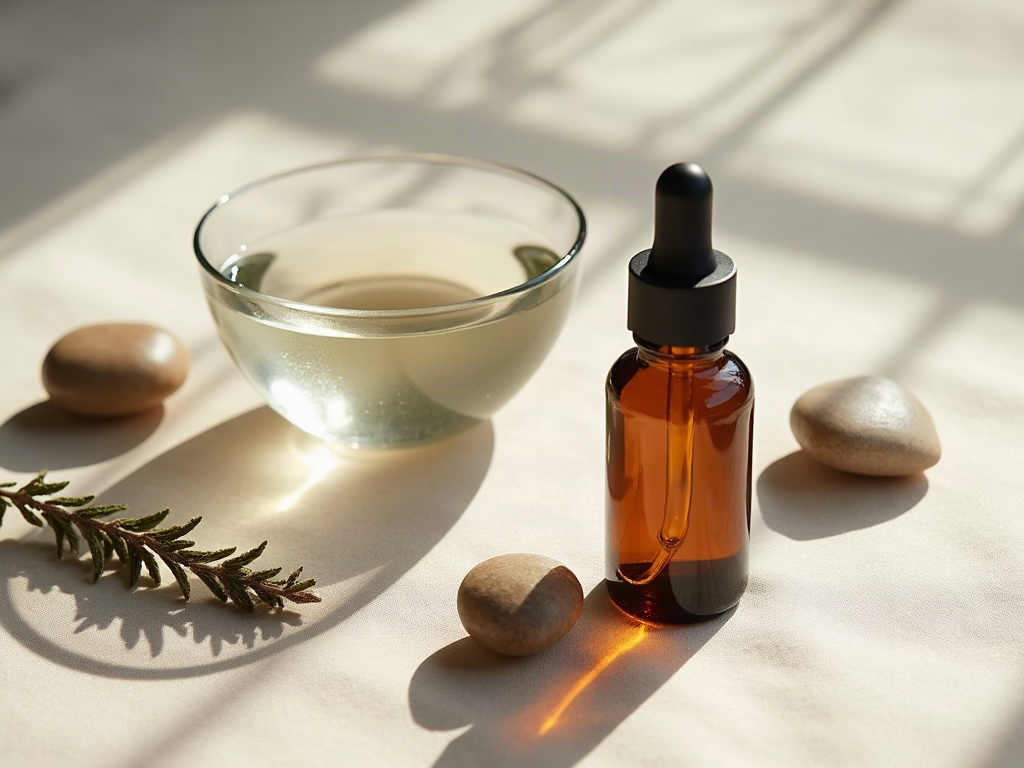
Every October, thousands of Boise-area homeowners restart their retinol serums after a summer break. Then comes the sting. The flaking. The unexpected irritation that was not there last spring. They blame the product, switch brands, or give up on retinol entirely. The serum is not the problem. Your water is.
October Is Retinol Season in the Treasure Valley
During summer, most dermatologists advise pausing or reducing retinol use because UV exposure amplifies photosensitivity. Boise summers are long and sunny. So from June through September, retinol routines get shelved.
October marks the return. Shorter days, less direct sun, cooler temperatures. Skincare routines shift back to active ingredients. The problem is that your skin has been conditioned to summer water all along, and your tap water has not changed. It is still hard. Very hard.
What Hard Water Is Doing to Your Skin Right Now
Boise municipal water averages 10 to 13 grains per gallon (GPG) of hardness. If you are in Meridian, that number climbs to 12 to 17 GPG, putting your water in the "very hard" classification. Those grains are calcium and magnesium minerals picked up as groundwater moves through Idaho's geology.
When you wash your face with hard water, those mineral ions do not rinse clean. They deposit a nearly invisible film on your skin surface. This film does three things that matter for skincare:
- It disrupts your skin's natural pH balance, which sits around 4.5 to 5.5 (mildly acidic). Hard water is typically alkaline, around 7 to 8.5 pH.
- It degrades the lipid barrier, the layer of fatty acids that keeps moisture in and irritants out. Research from UK Biobank research linking hard water areas to higher eczema rates points directly at this mechanism.
- It creates uneven absorption pathways. Retinol needs a consistent skin surface to penetrate at the same rate across your face. Mineral deposits create micro-inconsistencies that cause some areas to absorb more retinol faster than others.
A Sheffield University clinical trial found that hard water measurably impairs skin barrier function. This is not a wellness influencer claim. It is peer-reviewed science with direct implications for anyone using active skincare ingredients in a hard water area.
The Hidden Cause Behind Your Retinol Reaction
Here is the mechanism that makes fall restarts particularly rough. After three to four months off retinol, your skin has partially reset its tolerance. You are effectively re-introducing the ingredient to skin that has been weakened by a summer of hard water mineral exposure.
The combination of a compromised barrier, uneven mineral film, and a reintroduced active ingredient is exactly the right formula for stinging, redness, and flaking. This is not a sign that retinol is wrong for your skin type. It is a sign that your water is undermining the conditions retinol needs to work cleanly.
This same dynamic applies to vitamin C serums, AHAs, BHAs, and other active ingredients. Hard water mineral deposits make skin more reactive to all of them. But retinol, given its restart cycle in fall, is where Boise homeowners tend to notice it most sharply.
Boise's Groundwater Is the Starting Point
The Idaho Department of Water Resources is currently measuring water quality across 600 wells in the Treasure Valley and Payette Valley. The study, reported by KIVI-TV in October 2026, is tracking how rapid population growth is affecting the region's groundwater supply. That groundwater is the source of Boise's municipal water.
According to EPA groundwater data, mineral content in municipal water varies based on the underlying geology and seasonal conditions. In the Treasure Valley, volcanic rock and alluvial deposits contribute to naturally high mineral loads. This is not a municipal failure. It is a geology fact. The fix is at the point of use, inside your home.
What Soft Water Does for Your Skincare Routine
A water softener removes calcium and magnesium ions through a process called ion exchange, replacing them with trace sodium. The result is water that rinses cleanly off your skin without leaving a mineral residue.
Treasure Valley homeowners who have switched to soft water consistently report:
- Less tightness and dryness after washing their face
- Fewer reactions to active skincare ingredients
- Reduced product usage because soft water allows formulas to lather and absorb more efficiently
- Improvements in eczema and general skin sensitivity, consistent with the hard water eczema research specific to Idaho
The connection between water quality and hard water skin aging runs deeper than most people realize. The mineral film that blocks retinol in October is the same film accelerating skin barrier breakdown year-round.
This October: Fix the Water, Not the Serum
If you restarted retinol this fall and experienced unexpected irritation, the path forward is not a gentler product or a longer re-introduction schedule. Both of those approaches assume the problem is the ingredient. The problem is the delivery environment.
Soft water gives retinol a clean surface to work on. It stabilizes your skin's pH before the serum ever touches it. It removes the mineral interference that creates uneven absorption. Your skincare products were formulated to work with clean water. Give them that.
Find Out How Hard Your Water Really Is
Water Softener Boise offers a free in-home water test for Treasure Valley homeowners. We measure hardness, pH, and other factors affecting your water quality and your skin. No pressure, just data.