Boise Is Building to Keep Up (And Texans Are Part of Why)
Last month, the Boise City Council approved the Eckert Road Bridge redesign under the Boise River System Permit ordinance. It is the kind of vote that barely makes headlines outside Ada County, but it signals something real: the Treasure Valley is growing fast enough that the infrastructure has to run to keep up. New roads, new bridges, new water lines. The valley adds residents at roughly 3% per year, and Texas is consistently the second-largest state of origin for people making the move.
If you are one of those Texans, welcome. You already know hard water. You have dealt with white rings in the toilet, foggy shower glass, and soap that never quite lathers the way it should. You may have owned a softener back home, or at least thought about it. What you probably do not know yet is that Idaho's version of hard water is not the same as Texas's, even when the numbers on a test report look familiar. The mineral character is different, and it matters for how you treat it.
You Know Hard Water. But Idaho's Is Different.
Hard water is measured in grains per gallon (GPG). Texas ranges widely depending on where you lived: Austin typically runs 12 to 15 GPG, Dallas around 15 to 20 GPG, San Antonio at 17 to 20 GPG or higher. Those are solidly in the "very hard" category. When you pull a water report for Boise (10 to 15 GPG), Meridian (12 to 17 GPG), or Eagle (14 to 18 GPG), the numbers can look almost identical to what you left behind. Easy to assume the experience will be the same.
It is not. Texas hardness is driven almost entirely by calcium carbonate, the mineral that leaches out of limestone bedrock as water moves through the ground. The scale it leaves is white, chalky, and dissolves reasonably well with vinegar or a commercial limescale remover. Idaho's hardness comes from a completely different source: volcanic basalt and glacial outwash deposits across the Snake River Plain. The water percolating through that geology picks up calcium and magnesium, as in Texas, but it also picks up silica, silicon dioxide, the same mineral found in volcanic glass.
Silica does not behave like calcium carbonate. It etches glass surfaces rather than just coating them, forms a hazy film that resists standard cleaning products, and bonds differently to fixtures and tile. Texas transplants consistently notice that the shower glass in Idaho gets worse faster, and that their usual cleaning routine does not produce the same results. That is not imagination. The mineral profile genuinely is different, and it requires a different approach.
The Geology Is the Reason
The Snake River Plain is a crescent-shaped basin stretching across southern Idaho, formed by a series of ancient volcanic events. Beneath it sits the Eastern Snake Plain Aquifer, one of the largest and most productive aquifer systems in the Pacific Northwest, according to the Idaho Department of Environmental Quality. Treasure Valley municipal water systems draw from this aquifer and from the Snake River itself. As water moves through layer after layer of basalt, it dissolves minerals specific to that volcanic rock, including substantial amounts of silica that simply do not exist in the limestone geology of central Texas.
Texas limestone is sedimentary rock, laid down in ancient ocean beds, composed primarily of calcium carbonate. The scale it produces in pipes and on fixtures is predictable and relatively soluble. Basalt is igneous rock, formed from cooled volcanic lava, with a mineral composition that includes iron, magnesium, and silica compounds. When water dissolves calcium and magnesium from basalt, it carries silica along with it. That silica is what makes Idaho scale harder to scrub off, more prone to bonding permanently to glass, and less responsive to the acidic cleaners that worked well in Texas.
What Texas Transplants Notice in the First Month
Shower glass is usually the first thing people mention. Texas transplants who dealt with hard water scaling back home say the Idaho version moves faster and sits deeper. That is the silica etching at work: calcium carbonate scale sits on top of the glass surface, while silica etching forms a chemical bond with the glass itself. By the time the hazy film appears, standard vinegar treatments are doing very little. Squeegying after every shower helps slow it down, but it does not stop it.
Skin and hair often get worse here, too, even for people who dealt with hard water in Texas. Part of the reason is the mineral load; part of it is Boise's climate. The Treasure Valley runs significantly drier than most of Texas in the summer, with humidity often dropping below 20% on hot days. Minerals that deposit on skin and hair in hard water draw moisture out more aggressively in a dry climate. If you ran a softener or a whole-house conditioner in Texas, the adjustment to untreated Boise city water can feel jarring within the first few weeks.
Faucet buildup and dishwasher film follow a similar pattern. The calcium and magnesium form a crust on faucet necks and aerators, and the silica fuses into that crust, making it significantly harder than typical limescale. Standard limescale removers slow the process but rarely clear it completely without mechanical scrubbing. Laundry also takes a hit: hard water causes detergent to bind to minerals before it reaches fabric, the same problem as in Texas, but the silica component can leave fabric feeling stiffer and more faded over repeated wash cycles.
One more factor worth knowing: 2026 is a drought year in Idaho. USGS water data for Idaho and reporting from East Idaho News this fall confirm the state is facing historically low snowpack and reduced reservoir levels across much of the region. When flow in the Snake River Plain aquifer slows and less fresh water dilutes the supply, mineral concentrations in municipal water run higher than seasonal averages. The hardness Texas transplants encounter in 2026 is more pronounced than it would be in a normal precipitation year.
Your Softener May Need New Settings (If You Brought One)
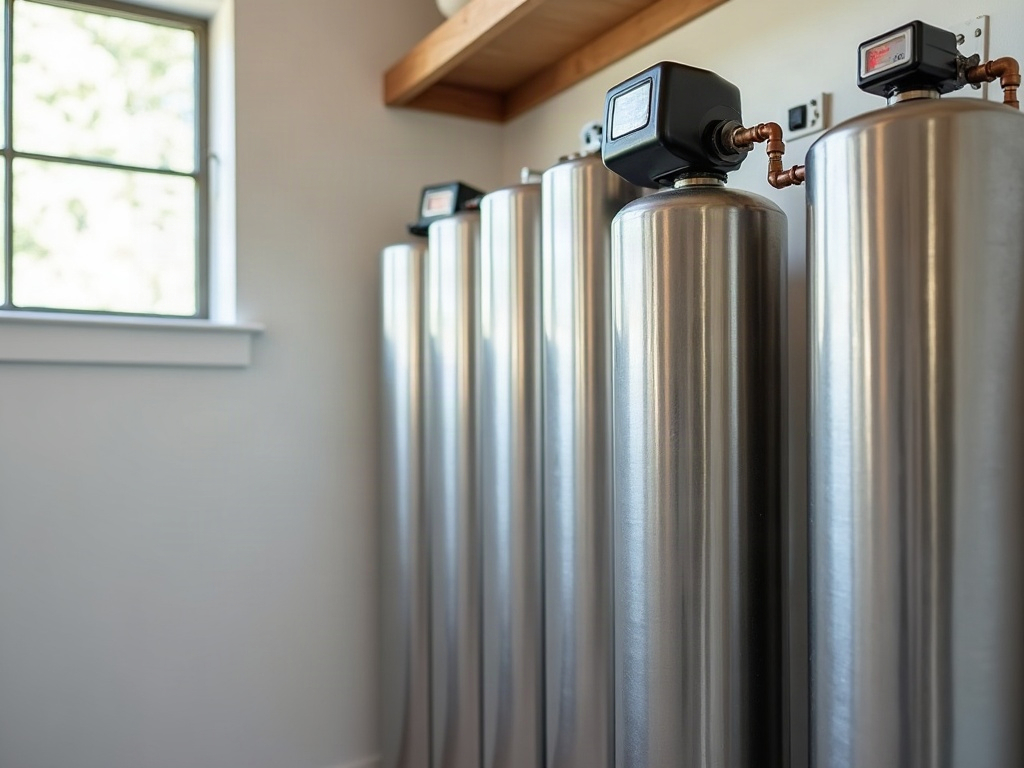
A lot of Texas transplants ship their water softener with the rest of their belongings. That is a reasonable call; a quality softener is worth moving. But the unit you programmed for Dallas or San Antonio water was calibrated for a calcium-dominant hardness profile. Idaho's water carries more magnesium and a silica load that Texas water generally does not. Magnesium requires different ion exchange dynamics than calcium alone, and your softener's regeneration cycle and salt dosage may be set wrong for what it is now seeing.
There is also a limit to what any ion exchange softener can do with silica. Ion exchange works by swapping calcium and magnesium ions for sodium ions; silica is not a cation and does not exchange the same way. A well-sized, properly programmed softener will reduce the calcium and magnesium substantially, which lowers the overall scale burden and makes the silica residue far more manageable. But if you came from Texas using a salt-free conditioner, be aware that conditioners work by crystallizing minerals so they do not stick to surfaces. Silica can still etch glass even when calcium is conditioned. The conditioner approach is less effective here than it may have been in Texas, and a test of your actual water is the only way to know what you are working with now.
Treasure Valley City-by-City Quick Reference
If you are still shopping for a home in the valley, or you want to know what your specific city's water profile looks like, here is a practical snapshot. These are seasonal averages; 2026 drought conditions are pushing concentrations higher across the board.
| City | Typical Hardness | Rating | Notes |
|---|---|---|---|
| Boise | 10-15 GPG | Very Hard | City water from Snake River Plain aquifer blend |
| Meridian | 12-17 GPG | Very Hard | Large development, consistent municipal supply |
| Eagle | 14-18 GPG (well: 18-22+) | Very Hard / Extremely Hard | Newer development; some areas on well water |
| Star / Kuna | 15-19 GPG | Extremely Hard | More rural; higher mineral concentration |
| Nampa / Caldwell | 14-19 GPG | Very Hard / Extremely Hard | Canyon County municipal plus some rural wells |
For a deeper side-by-side look at how these cities compare on multiple water quality dimensions, our Treasure Valley water quality city comparison article goes into more detail on what each municipality's treatment process looks like and what that means for homeowners in each area.
What to Do First When You Arrive
The single most useful thing you can do in the first few weeks is get a water test before you make any equipment decisions. This applies whether you are moving into a new construction home in Meridian, a resale in Boise proper, or an older home in Nampa or Caldwell. It also applies if you shipped your Texas softener. Do not assume that because the GPG number looks familiar, the mineral profile is the same. Our team offers free water tests with no obligation; the results tell you exactly what you are working with so any equipment choice is based on your actual water, not a guess.
If your new address is in Eagle, Star, Kuna, or any rural location in Canyon County, ask us to test for iron in addition to hardness. Idaho well water frequently carries elevated iron alongside the calcium, magnesium, and silica that define Treasure Valley hardness. Iron requires a different treatment approach than hardness alone, and a softener sized only for hardness may not perform well if iron is present and untreated. You can also review our overview of what a water test covers and why it matters if you want to understand the process before scheduling.
One practical note for Texans who bring an existing softener: grain capacity matters more here if you are moving to a rural address. Softeners sized for Texas city water (often calibrated for 15 to 20 GPG with a calcium-dominant profile) may be undersized for an Eagle or Star well running at 20 GPG with added magnesium and iron. A quick conversation with our team can tell you whether what you have will work or whether it needs to be upgraded before you have a problem.
Frequently Asked Questions
Is Idaho hard water worse than Texas hard water? +
Can I bring my Texas water softener to Boise? +
Why does my shower glass look worse in Idaho than it did in Texas? +
How hard is the water in Meridian vs Eagle? +
Do I need a water test if I already had a softener in Texas? +
Find Out Exactly What's in Your Water
Whether you just arrived from Texas or you have been in the valley for a year and are finally noticing the buildup, the right place to start is a free water test. We will tell you your actual hardness number, whether iron or silica is a factor at your address, and what your existing equipment needs to perform correctly here.
No pressure. No obligation. Just the facts about your specific water.
Serving Boise, Meridian, Eagle, Star, Kuna, Nampa, and Caldwell